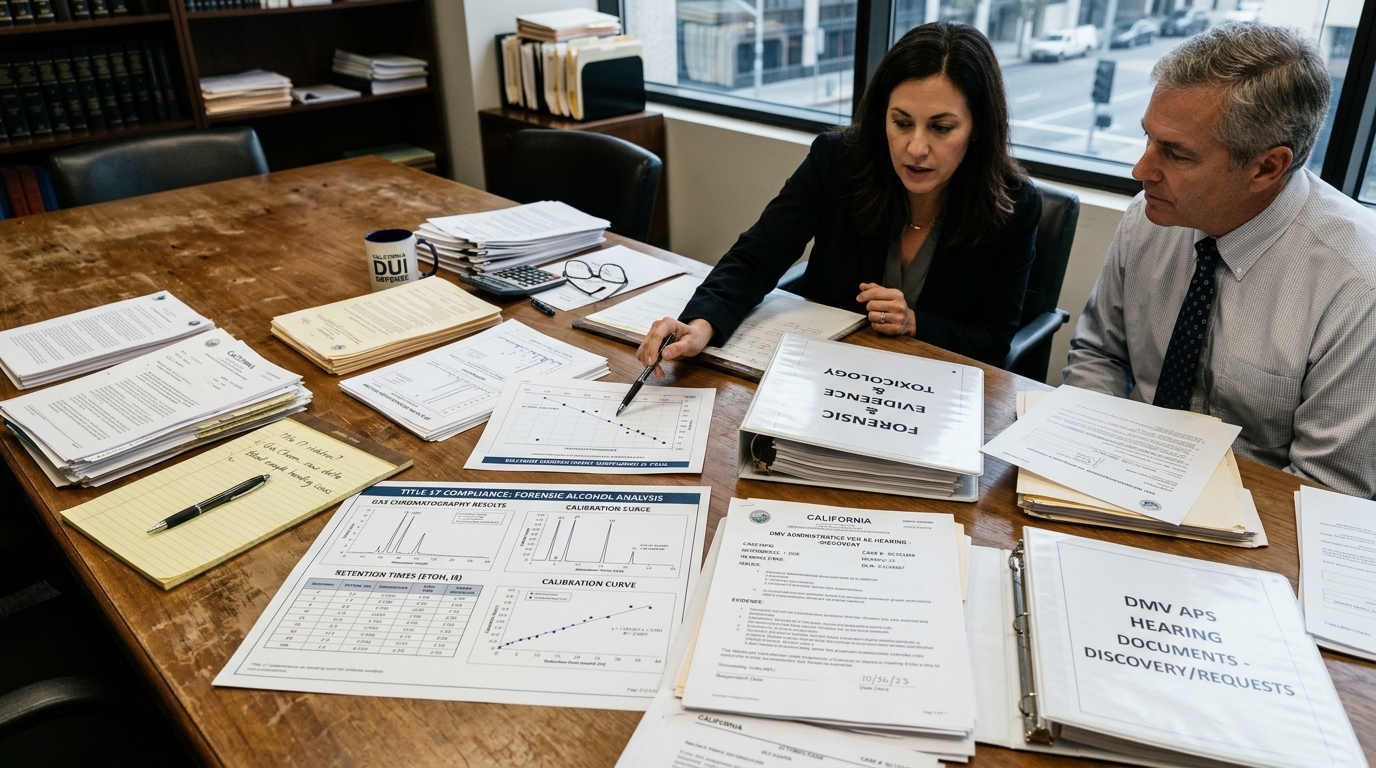
Driving Under the Influence (DUI) charges in Los Angeles County involve two parallel and aggressive legal proceedings: the criminal prosecution in the Superior Court of California and the administrative driver's license suspension before the Department of Motor Vehicles (DMV). Successfully defending a DUI charge requires technical mastery of California Vehicle Code Sections 23152 and 23153, forensic chemical analysis, and strict adherence to Title 17 of the California Code of Regulations.
The Critical 10-Day DMV Administrative Per Se (APS) Rule
Following a DUI arrest, law enforcement confiscates the motorist's physical driver's license and issues a pink "Notice of Suspension / Temporary Driver's License" (Form DS-367). The motorist has exactly 10 calendar days from the date of arrest to request an Administrative Per Se (APS) hearing with the DMV Driver Safety Branch.
Failing to demand a hearing within the 10-day window results in an automatic license suspension upon expiration of the 30-day temporary permit. When counsel timely requests the hearing, the DMV is legally mandated to stay the suspension, preserving full, unrestricted driving privileges until the administrative evidentiary hearing concludes.
Misdemeanor vs. Felony DUI under California Law
| Statute | Classification | Core Statutory Element | Maximum Penalty |
|---|---|---|---|
| VC 23152(a) | Misdemeanor | Driving under the influence of alcohol/drugs impairs physical/mental abilities | 6 months jail, $1,000 fine, 3-9 mo DUI school |
| VC 23152(b) | Misdemeanor | Driving with a Blood Alcohol Concentration (BAC) of 0.08% or higher | 6 months jail, $1,000 fine, IID mandate |
| VC 23153(a)/(b) | Wobbler (Felony) | DUI causing bodily injury to any person other than the driver | Up to 3-4 years state prison + GBI strike enhancements |
| 4th DUI in 10 Years | Felony | Fourth or subsequent DUI conviction within a statutory 10-year lookback period | Up to 3 years state prison, 4-year license revocation |
Forensic Evidentiary Challenges: Attacking Chemical Test Reliability
A DUI charge is heavily dependent on scientific measurement. Expert criminal defense cross-examination targets several systemic vulnerabilities in forensic evidence:
- Title 17 Regulatory Violations: California Code of Regulations Title 17 establishes strict protocols for chemical testing. Violations—such as failure to conduct a continuous 15-minute observation period prior to breath testing, improper sample storage, or lack of preservative (sodium fluoride) in blood vials—can lead to suppressed or discredited test results.
- Rising Blood Alcohol Defense: Alcohol takes between 45 minutes to 2 hours to fully absorb into the bloodstream. A driver who consumed alcohol shortly before driving may have had a legal BAC under 0.08% while operating the vehicle, with BAC rising above the legal limit only later during chemical testing at the police station.
- Breathalyzer Calibration & Maintenance Log Audits: Evidentiary breath machines (such as the Intoximeters EC/IR II) must undergo calibration testing every 10 days or 150 uses under Title 17 Section 1221.4. Subpoenaing machine logs frequently uncovers instrument drift and calibration errors.
Ignition Interlock Device (IID) Requirements under SB 1046
Under California Senate Bill 1046, drivers facing administrative suspension for first-time or repeat DUIs can obtain an immediate restricted license without serving a hard suspension period by installing a certified Ignition Interlock Device (IID) on their vehicle, providing proof of financial responsibility (SR-22), and enrolling in an approved AB 541 DUI education program.