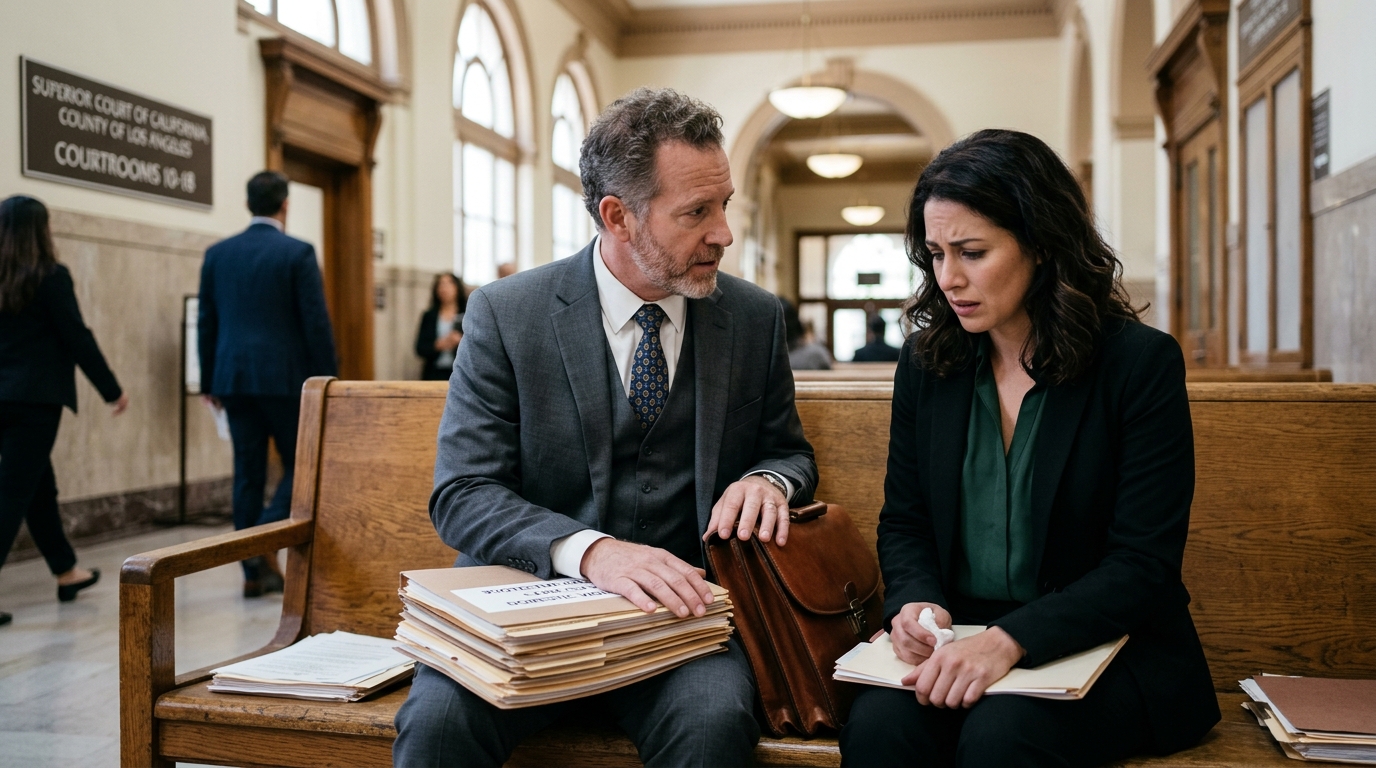
In California criminal jurisprudence, domestic violence allegations represent among the most aggressively prosecuted offenses in Southern California courts. Mandatory arrest policies, immediate Emergency Protective Orders (EPOs), and specialized prosecution units mean that even uncorroborated, emotional disputes can lead to devastating felony or misdemeanor filings. Defending these charges requires immediate statutory intervention under the California Penal Code and Evidence Code.
Distinguishing the Two Primary California Domestic Violence Statutes
California law draws a critical distinction between misdemeanor domestic battery and aggravated corporal injury to an intimate partner:
Penal Code Section 243(e)(1) — Domestic Battery (Misdemeanor)
PC 243(e)(1) defines domestic battery as any willful and unlawful touching that is harmful or offensive against an intimate partner (spouse, cohabitant, fiancé, or co-parent). Crucially, no physical injury or mark is required. Penalties include up to one year in county jail, mandatory 52-week Batterers' Intervention Program (BIP), and a 10-year firearm prohibition.
Penal Code Section 273.5 — Corporal Injury to Spouse or Cohabitant (Wobbler)
PC 273.5 requires proof of a willful infliction of physical injury resulting in a "traumatic condition" (defined as any wound or internal/external injury, whether minor or serious, caused by physical force). Charged as either a misdemeanor or a felony, felony convictions carry up to four years in California state prison, substantial restitution, and potential Three Strikes consequences.
Navigating Criminal Protective Orders (CPOs) & Domestic Violence Restraining Orders (DVROs)
Upon arrest, law enforcement routinely requests an on-call judge to issue an Emergency Protective Order (EPO) valid for 5 to 7 days. At the initial arraignment in Los Angeles Superior Court (such as the Clara Shortridge Foltz Criminal Justice Center, Van Nuys, or Long Beach), prosecutors invariably request a mandatory Criminal Protective Order (CPO) under PC 136.2.
A full "No-Contact" CPO forces the defendant out of their family home, bars communication with children, and restricts firearm ownership. Experienced defense counsel can advocate for a modified "Peaceful Contact" Order (Level 1 CPO), permitting cohabitation and civil communication while the underlying case proceeds.
Proven Trial Defense Strategies
- Self-Defense and Defense of Others (CALCRIM 3470): Demonstrating that the defendant reasonably believed they were in imminent danger of suffering bodily harm and used only the force reasonably necessary to defend themselves.
- False Allegations & Custody Leverage: In contentious family law dissolutions, domestic violence allegations are sometimes fabricated to gain unilateral child custody or exclusive residence possession under California Family Code Section 3044.
- Accidental Contact / Lack of Willful Intent: Physical contact occurring during mutual struggle, door bracing, or accidental flailing lacks the statutory requirement of intentional force.
- Evidence Code 1109 Prior Act Defense: Challenging the prosecution's attempt to introduce uncharged alleged prior domestic incidents through rigorous pretrial evidentiary motions.
Pretrial Diversion Pathways under California Penal Code 1001.95
Under California's judicial misdemeanor diversion statute (PC 1001.95), judges possess discretionary authority to grant pretrial diversion for misdemeanor domestic violence charges over prosecutorial objection. Successful completion of court-ordered counseling, community service, and compliance leads to complete dismissal and record sealing under California Penal Code Section 851.92.